


 Español
ITALGRES at Cersaie 2026: Where Porcelain Tile Is Heading
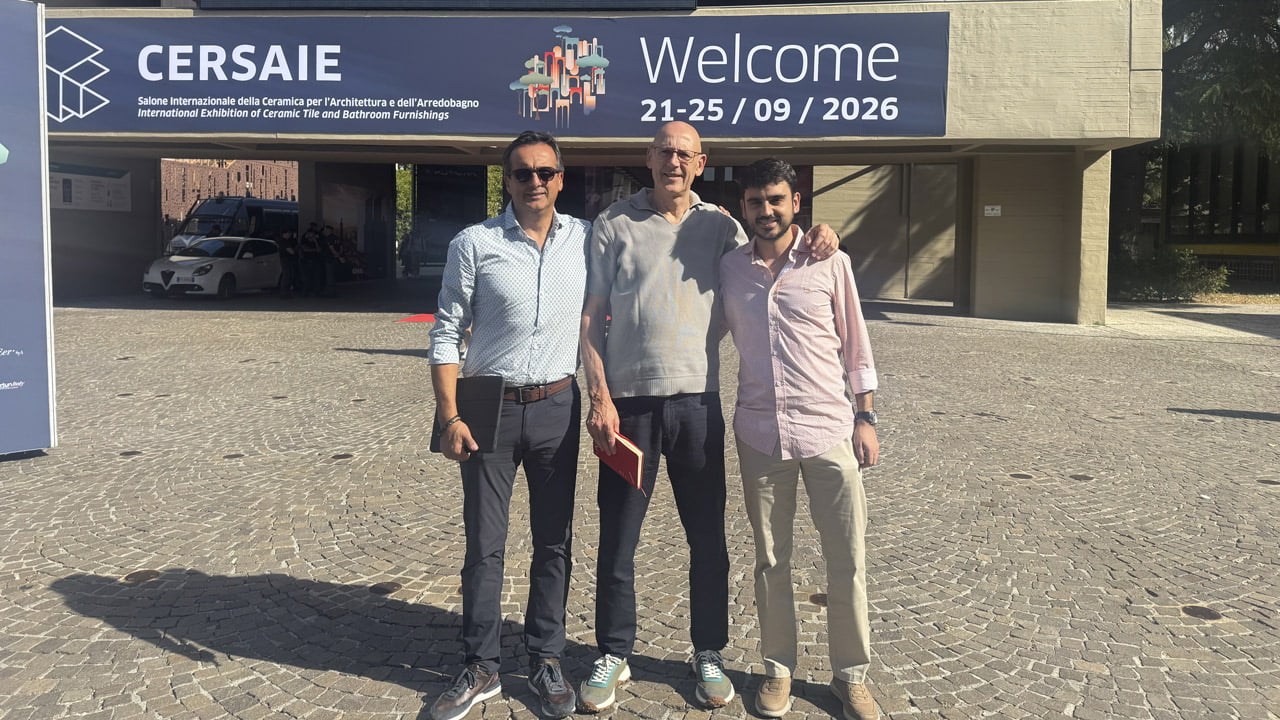
Every edition of Cersaie gives us a clear picture of where the industry is heading, but this year one thing stood out: porcelain tile is entering a warmer, more tactile, and more architectural era.
After walking through Cersaie 2026 in Bologna and discovering the latest innovations presented by Italian and Spanish porcelain tile manufacturers, we saw an evolution that goes far beyond color or any single trend. Surfaces have more depth, textures are taking center stage, finishes are becoming more complex, and technology is making it possible to create increasingly remarkable materials.
If one of our main takeaways from Cersaie 2025 was the incredible level of realism that porcelain tile had achieved, in 2026 that evolution goes one step further. It is no longer simply about making a stone-look porcelain tile resemble natural stone or a wood-look porcelain tile faithfully reproduce wood. Porcelain is beginning to develop a design language of its own.
Among the main porcelain tile trends 2026, we saw a clear shift toward warmer colors, terrazzo, travertine, and textured surfaces.
These are the tile trends 2026 that caught our attention the most.
1. GOODBYE COLD GREY: WARM TONES TAKE CENTER STAGE
Probably the most noticeable change at Cersaie 2026 was color.
After years in which cool whites and greys dominated much of interior design, the latest European porcelain tile collections are clearly shifting toward a much warmer palette.
Ivory, warm beige, sand, taupe, creamy neutrals, light brown, and warm grey appeared consistently throughout the stands of Italian and Spanish manufacturers. Cool tones are still present, but they were considerably less prominent.
Neutrals are not disappearing: they are becoming warmer, richer, and more sophisticated.
This shift toward warm tone porcelain tiles also reflects an approach to interior design that is increasingly connected to natural materials. Beige porcelain tiles, sand, and ivory tones work particularly well alongside natural wood, stone, warm metals, and organic fabrics.
We also saw a stronger presence of cotto and terracotta looks, bringing traditional Mediterranean references into a much more contemporary aesthetic. Rather than literally recreating a rustic Mediterranean style, the new collections feature cleaner graphics, natural colors, and more contemporary surfaces.
2. TERRAZZO, CEPPO DI GRÉ, AND AGGREGATE STONES CONTINUE TO GROW
Another major porcelain tile design trend at Cersaie 2026 was the strong presence of aggregate-inspired stones.
The terrazzo porcelain tile trend has been growing for several seasons, but at Cersaie 2026, terrazzo was practically everywhere. We saw everything from surfaces with very fine micro-grain to designs featuring medium, large, and even oversized fragments.
Although terrazzo continues to have plenty of personality, many of the 2026 designs feature aggregates in a slightly softer and more balanced way.
Alongside terrazzo, we saw references to Ceppo di Gré, breccia, and other natural stones with mineral fragments, greatly expanding the possibilities of stone-look porcelain tile.
Technology also plays an important role in this evolution. High-definition digital printing can reproduce fragments, mineral variations, and tonal changes with remarkable precision, while new surface structures add depth to the material.
The result is terrazzo-look porcelain tile that no longer has to be used simply as a background. These surfaces are becoming true architectural elements, capable of defining a bathroom wall, residential floor, kitchen island, or reception area.
3. TOUCH MATTERS AS MUCH AS APPEARANCE
If we had to choose one word to define many of the innovations at Cersaie 2026, it would be texture.
We saw extremely soft finishes, brushed surfaces, combinations of matte and polished areas, subtle reliefs, and controlled reflections that change depending on how light hits the surface.
Some of these solutions were already beginning to appear in 2025, but this year, the variety of finishes has increased considerably.
And there is an important distinction here. Textured porcelain tile no longer necessarily means a heavily structured or decorative surface.
New textures can be extremely subtle. A slight relief, a gently raised vein, or different levels of reflection can add depth without making the material feel excessive.
Porcelain tile is no longer just something we see; it is becoming something we also experience through touch.
This evolution is particularly interesting for the Miami and South Florida markets, where clean, minimalist, smooth, and matte surfaces have traditionally performed very well. The new generation of textured porcelain tiles maintains that contemporary aesthetic while introducing much more depth and character.
4. TECHNOLOGY IS MAKING SURFACES MORE REALISTIC THAN EVER
Behind many of the porcelain tile trends 2026 is a major technological evolution.
High-definition digital printing, digital glazing, structured pressing, carving effects, surface finishing, and controlled polishing make it possible to work with tile surfaces at a level of precision that would have been difficult to imagine just a few years ago.
One of the most interesting advances is the synchronization between graphics and texture.
In certain collections, the vein we see is not simply printed onto the porcelain tile. The physical relief follows the movement of the vein, meaning that what we see and what we feel when touching the surface come together.
We also found glazes with greater dimension, different levels of gloss within the same piece, and surfaces capable of subtly changing their reflection depending on the light.
Technologies such as Carved, which we started seeing several years ago, are part of this evolution toward materials with greater depth and realism.
And with large format porcelain tile and porcelain slabs, these advances become even more visible. Working on a larger scale allows veins, graphics, and variations to develop across the surface more extensively, creating a strong architectural impact.
Technology is no longer simply helping porcelain tile imitate stone more realistically. It is allowing manufacturers to create surfaces with an identity of their own.
5. TRAVERTINE REMAINS A MAJOR INFLUENCE
While other trends change quickly, travertine continues to be one of the major references in porcelain tile.
At Cersaie 2026, we continued to see numerous interpretations of travertine-look porcelain tile, in both vein cut and cross cut designs.
Vein cut emphasizes the characteristic linear veining of travertine, creating a more directional surface. Cross cut, on the other hand, creates a more open and organic pattern.
This variety allows travertine porcelain tile to be used in many different ways, from walls and bathrooms to expansive flooring applications and projects seeking a more architectural aesthetic.
Its natural palette also connects perfectly with another of this year’s major trends: the shift toward beige, ivory, sand, and other warm tones.
Travertine is not new for 2026. What makes it particularly interesting is that it continues to evolve while maintaining a strong presence season after season.
6. MORE COLOR: PINK TAKES CENTER STAGE
The shift toward warm neutrals does not mean Cersaie 2026 has become completely beige. Color is gaining presence again, and among all the shades we saw, pink stood out in particular.
From soft pink and dusty pink to warmer, muted shades, we saw pink incorporated into different surfaces and collections, adding color without disrupting the natural, warm aesthetic that defines the porcelain tile trends 2026.
Alongside pink, we also saw burgundy, deep green, cotto, and dark brown, mainly used as accents within more neutral palettes.
The key is to use color more strategically. Instead of necessarily covering an entire space in a bold shade, decorative porcelain tile can introduce color through a feature wall, bathroom, specific flooring area, or statement architectural surface.
The foundation remains warm and natural, while pink and other accent colors add personality and a new dimension to the space.
This combination of warm neutral porcelain tiles and colored porcelain tiles makes it possible to create contemporary interiors with more character without losing the warm, natural aesthetic that defined Cersaie 2026.
FROM CERSAIE 2026 TO OUR TILE STORES IN MIAMI AND ORLANDO
After walking through Cersaie 2026, our main conclusion is not related to a single color, size, or finish.
Porcelain tile is becoming warmer, more tactile, more sophisticated, and more architectural.
The industry has reached a technological level where convincingly reproducing marble, stone, wood, or travertine no longer has to be the final goal.
Now we can also ask: what can we create with porcelain tile that would be difficult to achieve with a natural material? That is one of the main reflections Cersaie 2026 left us with.
For architects and interior designers, this opens up new possibilities: large format porcelain tile, textured porcelain tile, terrazzo porcelain tile, travertine-look surfaces, warm tone tiles, and new combinations of color and finish that allow the material to be used in increasingly architectural ways.
And many of these European tile trends 2026 will begin making their way into residential, hospitality, and commercial projects across Florida in the coming months.
From our tile showrooms in Miami and Orlando, ITALGRES continues to select Italian and Spanish porcelain tiles to bring the latest European trends to architects, interior designers, builders, contractors, and homeowners looking for porcelain tiles in Miami and porcelain tiles in Orlando.
